About
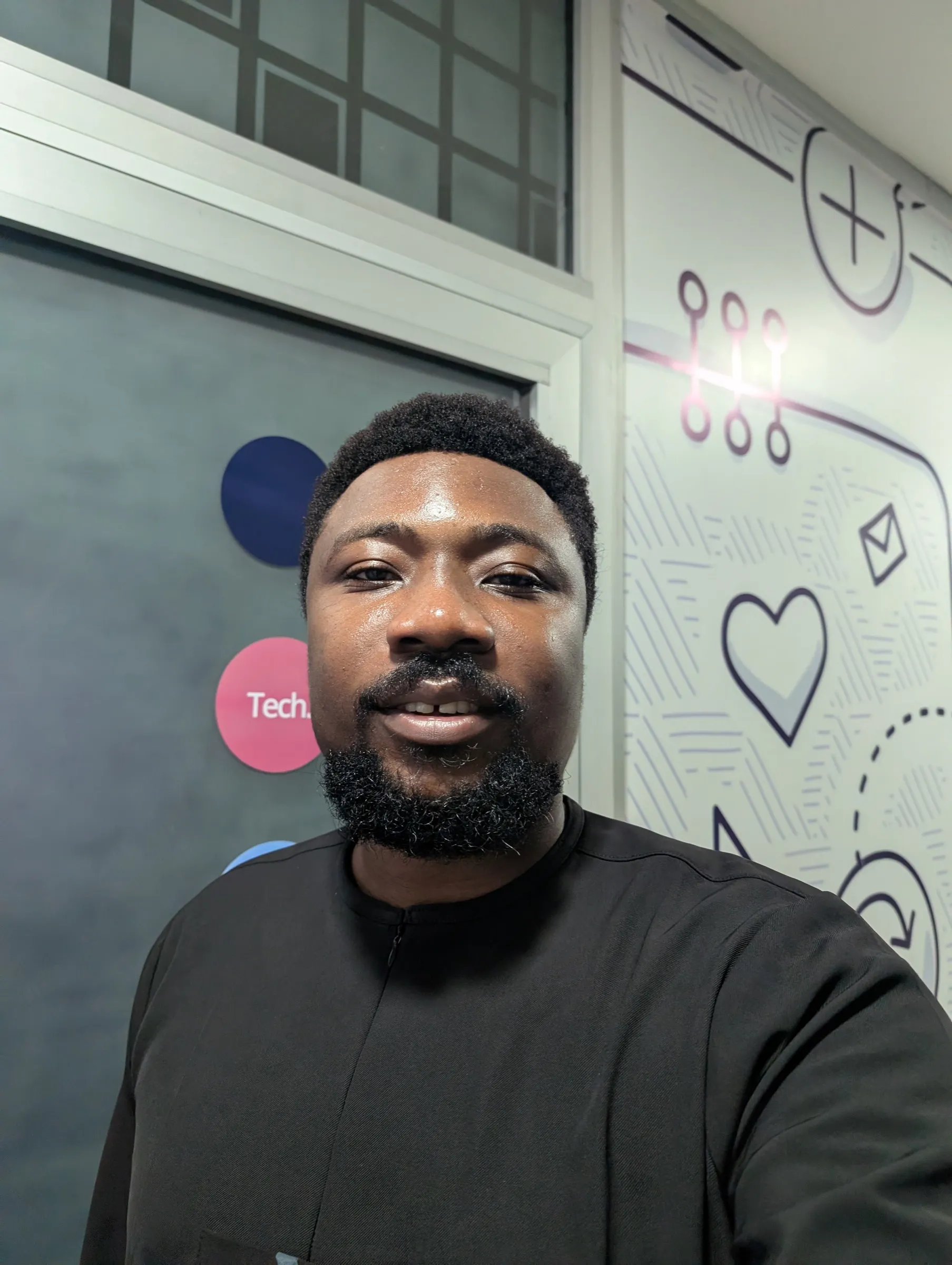
I studied Computer Science, with a focus on Information Systems, at Babcock University. That was where software started to feel real to me. Campus software exhibitions made it clear that code could move beyond assignments and become something useful for people.
One of my earliest serious projects was a maternal-care application I built with friends. It provided pregnancy-stage information and practical guidance for expectant mothers. We won the exhibition that year and were invited by Microsoft to participate in the Imagine Cup in Port Harcourt in 2012. That experience stayed with me.
I spent the early part of my career in the Nigerian public service, working for about eight years on education applications at the University of Abuja and participating in research work with the Centre of Excellence for Sickle Cell Disease Research and Training. That period gave me a grounding in systems that serve institutions, researchers, and real communities.

I later moved into the private sector, where most of my work has been in financial technology: core banking, bank and switch integrations, POS middleware, bill payment reseller systems, wallet systems, reconciliation engines, agency banking, and merchant solutions.
One of the things I am most proud of is walking into a supermarket or a petrol station and seeing people use software I worked on to complete real transactions. Some of those systems serve hundreds, and in some cases thousands, of users at the point of sale. That is the part of engineering I care about most: software leaving the diagram and doing useful work in the world.

I have held several engineering leadership roles, and I enjoy sharing practical ideas from the work. That has led me to write and make videos, mostly around finance, technology, and the systems behind money movement. Lately, I have also been paying more attention to artificial intelligence: especially developer tools, the repetitive work AI can take off programmers, and how AI may influence financial services.